Watching porn has become the norm, however, are we aware of its real and deep effects?
I stumbled upon a subreddit called no fap which talks about the no fap challenge, which is basically abstaining from watching porn and masturbating indefinitely. What struck me is that this subreddit has over a million subscribers, so I thought I’d give it a try based on the feedback of everyone there.
After approximately a week of abstinence the effects start to kick in, they include exponential increase in mental concentration, feeling much more happier and enjoying the small things in life and the scenery outdoors much more, more energetic, more confident and everyone, girls and guys start complimenting you on your looks and you gain a lot of attention and respect in the process, all this just by abstaining from porn and more importantly masturbation.
The benefits of watching porn pale in comparison, except for the limited time of sexual pleasure you get you end up depressed, moody and soul less afterwards.
Give the no fap challenge a try for at least a week and tell me if any of the above resonated with you at the 1 week mark or maybe a bit more than a week. If you ever feel weak you can go to the subreddit asking for advice and support there! A lifetime of happiness vs a moment of pleasure, you choose!
First and foremost, if there’s a God and he gave us brains to think in a logical and coherent matter then it’s only right that we attempt to use it as much as possible and gather as much knowledge as possible about everything.
With that being said, in order to be logically consistent we need to study and be aware of logical fallacies, especially when discussing religions. And believe me when I say that most religions and especially so called holy scriptures are full of logical fallacies or in other words faulty thinking. One small example that crosses my mind amongst the tens if not hundreds of other logical inconsistencies is when the Prophet Mohammad was challenged by the non believers, asking him to let his God torture them, in God’s words he replied to the non believers in the Quran that God won’t torture them whilst you’re (the prophet) amongst them. How is this the same God that describes himself as all powerful almighty? It seems contradictory knowing that he was unable to torture them while protecting his prophet.
We can approach the topic from a human perspective on the other end of the spectrum. The reason I’m focused on Christianity and Islam is due to their popularity. Let’s take Islam for example, which states that believers eventually go to heaven no matter how bad their deeds were as long as they believe in Allah, whereas a non believer no matter how good he does he won’t be going to heaven at all, and the concept and descriptions of both hell and heaven are so primitive in their descriptions according to Islam. But back to the main idea, how is this a fair and just system put in place? What kind of God is this?
In Islam, anyone who is caught stealing or confesses to stealing will have his hands cut off accordingly, of course because they didn’t know any better back then, 1400 years ago. How is this act justified from a human perspective? It’s not and never can be. How can this be a just and at the same time merciful God’s words? It’s not.
As an ex Muslim, I can say that religion unites us as a group but divides us as humans first and foremost, Islam and Christianity in particular. It gives us a false sense of security and arrogance at times, or sort of superiority complex. Above all, it limits our capacity to think clearly and seek answers elsewhere, other than in these outdated and meaningless scriptures, answers that help us build and sustain a better world for ourselves and for our fellow humans irrespective of anything else.
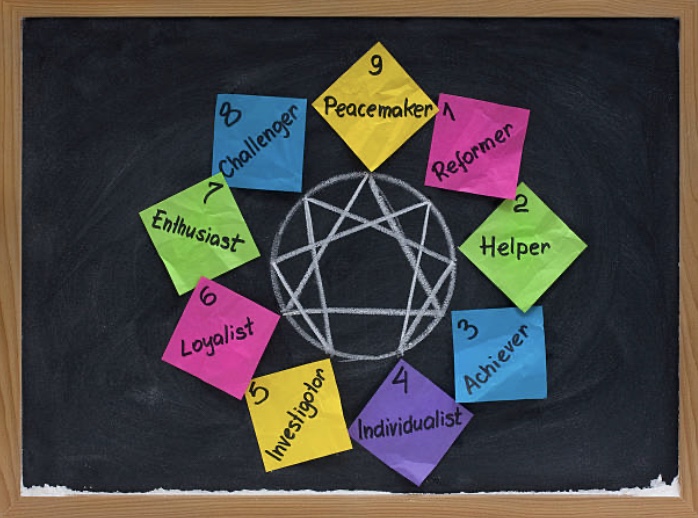
There’s an ancient tool called the enneagram which consists of numbers 1 to 9, each number corresponding to a specific personality type. It describes our fears, motivations and coping mechanisms in life.
Number one is the reformer and perfectionist, they are self disciplined, detail and rules oriented, they strive for goodness and avoid being evil at all costs, because they fear being corrupt. They can be rigid at times because of their attention to following certain rules and protocols because they tend to have a strong inner critic.
Number two is the helper. They fear being unlovable so they strive to meet the needs of people around them, sometimes at the expense of their own needs. They are dutiful, nurturing and supportive people but they can lack connection to themselves at times by always trying to fulfill others needs and expectations of them. Their growing edge is to realize that they also have to make time for their selves and what they like to do for themselves.
Number three is the success or achievement oriented person who is very competitive, focused on the bigger picture and achieving goals. They are focused, energetic, action oriented and very ambitious people. Their basic fear is the fear of failure above all and their downside is they can be deceitful in projecting a false image of vanity. Regardless, their competitive side makes them want to be the best at whatever it is they set out to achieve or be.
Number four is the individualist, sensitive and sometimes dramatic type depending on the subtype (we’ll discuss subtypes later on in another post). They are introspective, creative, expressive and emotional people. They fear the ordinary and mundane and strive to carve out a distinct image and identity. Their vice is melancholy and their virtue is equanimity; to have composure in difficult situations instead of letting your emotions get the best of you.
Number five is the observer or the investigator, they are always acquiring new information and live in their heads a lot of the times, they are cerebral, withdrawn and detached from emotional reactivity. Their vice is avarice or stinginess and their virtue is non attachment.
Number six is the loyalist and skeptic, they are masters of worst case scenario thinking. But it’s not always a bad thing since these people like to prepare for emergencies, they can help us in such cases. What is bad is if they take things too far by always analyzing what could go wrong even when it’s unheeded or uncalled for. They fear fear itself and their virtue is courage. Did I mention they’re very loyal, trustworthy and supportive people?
Number seven is the enthusiast, very upbeat, energetic and excited people. They see life through rose colored glasses and are always planning for exciting things to do, new places to visit, new people to meet and new food to eat… Their vice is gluttony and their virtue is sobriety.
Number eight is the challenger, leader and protective type. They are usually blunt, strong physically and mentally and they fear weakness and humiliation or being at the mercy of injustice. They also fear betrayal from closed ones so they can be very wary in their relationships. Their vice is lust, lust for life and they don’t want to be held back by anything, they want to experience life fully and be in control of their destinies. Their virtue is innocence where they connect with their inner child that felt unprotected as a child and needed to counteract it by being strong and confrontational as they grew up.
Last but not least we have type nine. Type nine is called the peacemaker as they can see and understand others points of view but struggle with finding their own view or direction in life, they hate to rock the boat and can be complacent at times. They are positive, calm, gentle and peaceful people. Their vice is sloth and their virtue is taking the right action. They fear conflict the most. Surprisingly, they can be great leaders depending on their subtype.
 Towards a better future